 Internal tooling · Disney · 2019
Creative tools
for Disney
Creative Executives at Disney find inspiration everywhere, on napkins, in old films, in overheard conversations. The tools they used to capture and communicate those ideas were outdated and frustrating. I designed an intuitive, multi-persona platform to connect Creative Executives, Librarians, and Administrators in a seamless workflow.
Three roles, one broken communication system
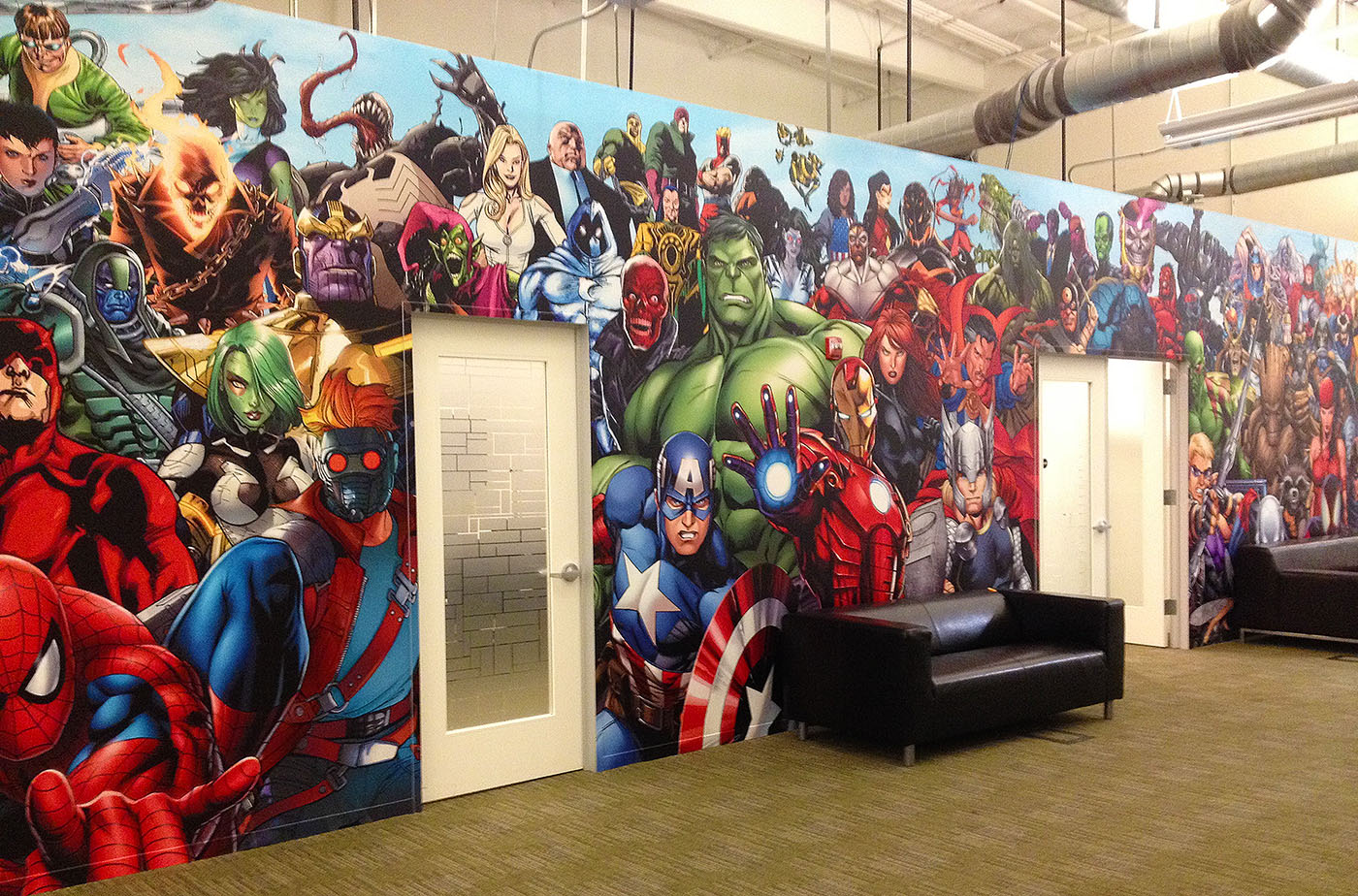
Creative Executives at Disney are observers with big ideas. They find inspiration in everyday life while working remotely, scouting locations, meeting industry executives, travelling internationally. Their role is to communicate ideas to Librarians, who research whether those ideas would be viable and marketable as films. Administrators oversee communication channels and manage media data.
The system connecting all three roles was outdated, slow, and creating friction at every handoff. My task was to design a way to make their communication seamless, intuitive, and engaging, while accounting for the very different workflows, access levels, and technical needs of each persona.
Mapping before designing
Before any design work began I used Omnigraffle on an infinite canvas to map the relationships between all three personas, their goals, specialist skills, shared touchpoints, and potential blockers. Like defining roles on a sports team, the mapping exercise clarified what each persona needed to accomplish and how their workflows intersected.
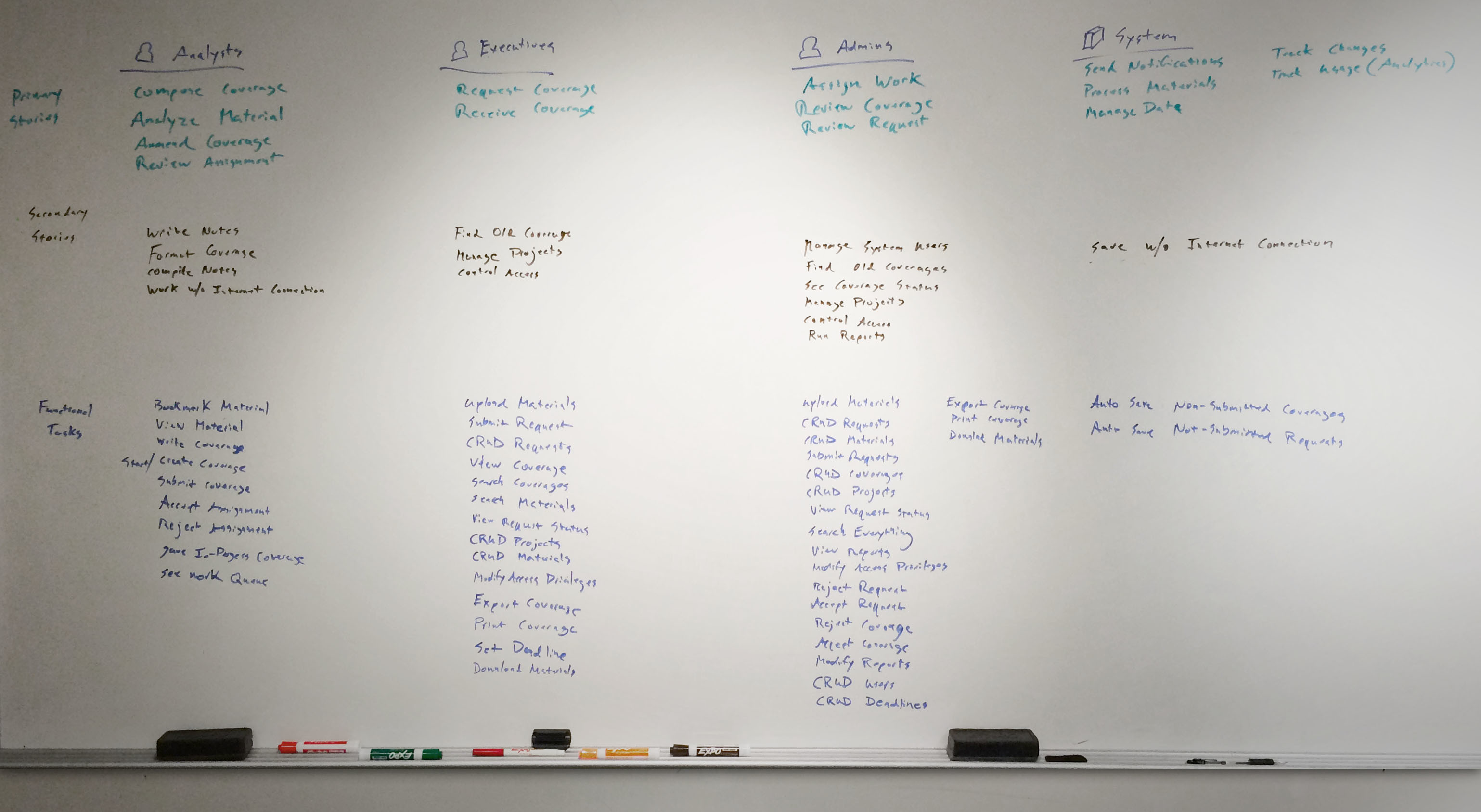
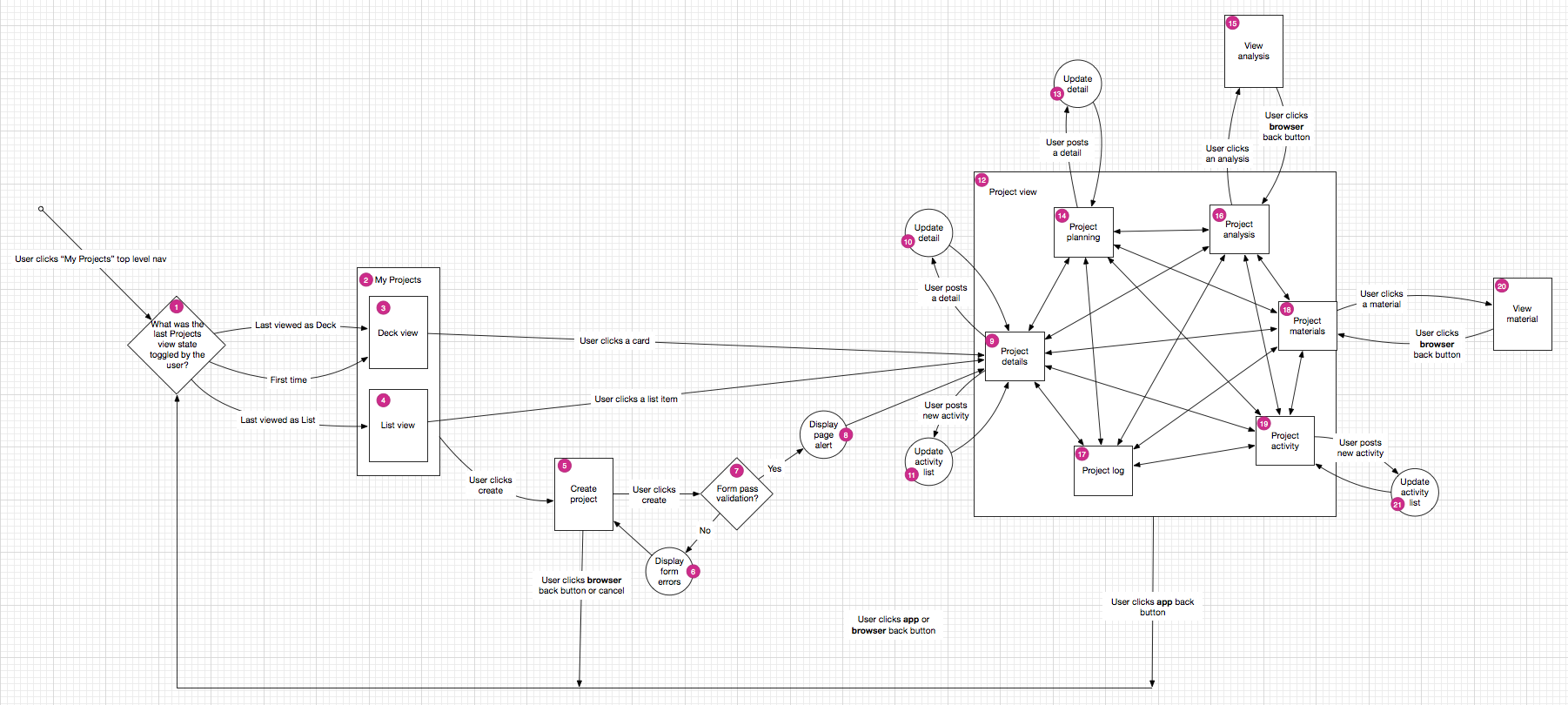
Mapped every persona's tasks, goals, and communication requirements using Omnigraffle on an infinite canvas. Journey mapping for each persona revealed which features would be shared, which were persona-specific, and where design could reuse patterns to reduce development overhead.
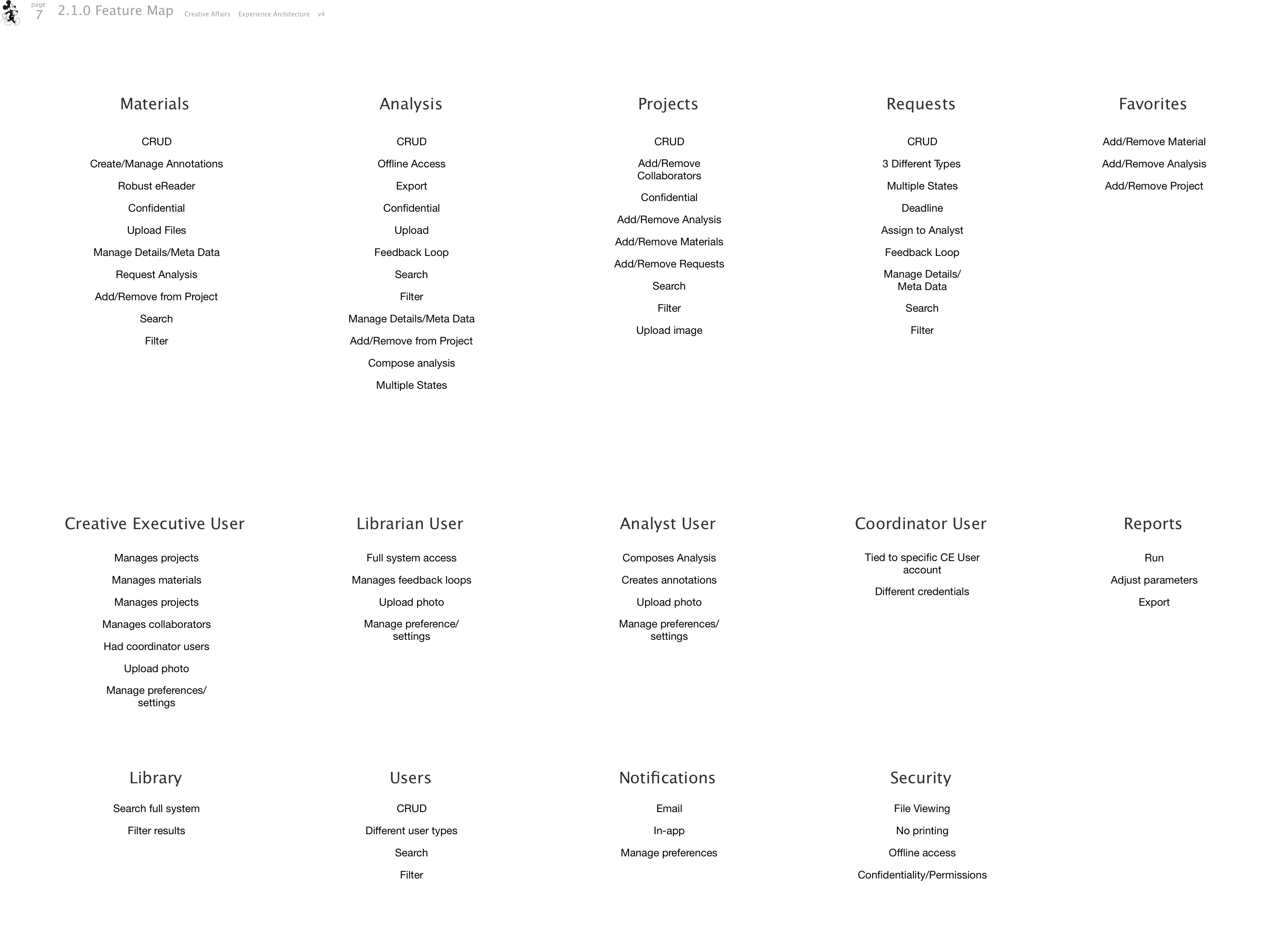
Created a feature map identifying which affordances would be used by each persona and how they related to the features of the others. Time-boxing this phase was critical, allowing development to begin scoping infrastructure while design investigated high-risk areas of the map.
Built interactive prototypes in Axure to test feature assumptions with target users frequently and early. I conducted moderated user testing in both low-cost and elaborate in-house testing environments at Disney, adapting communication style for each participant to get the most honest results possible.
Managed ongoing stakeholder inclusion throughout every stage of the project. When stakeholders pushed for features that user data did not support, I presented the research alongside economic implications, MVP goal alignment, and feature creep risk before escalating to a tracked prototype test.
When the business and the data disagree
A recurring challenge on this project was navigating disagreements between what stakeholders wanted to build and what user research was validating. When analytics and user testing failed to convince stakeholders that a particular feature was a detriment to the product, I developed a two-step approach.
"Rather than push back or comply, I added tracking code to the feature inside the prototype and let users tell us the answer. By the time the data came back, the conversation had moved from opinion to evidence."
First, I gathered more targeted data via user testing, contextual inquiry, and analytics, presenting findings alongside economic implications and MVP alignment. If the stakeholder remained firm, I included the feature but instrumented it with tracking code in the prototype, letting real user behaviour settle the disagreement before any development resource was committed.
Approach to testingModerated testing as a soft skill
At Disney I had the opportunity to conduct moderated user testing in a range of environments, from informal sessions through to purpose-built testing labs. One consistent insight from this work is that test results vary significantly based on the moderator's approach.
Each participant needs to be communicated with differently. Identifying those needs quickly and adapting, while remaining compassionate but assertive, is what separates reliable findings from data that reflects the session rather than the product.
Designed a single platform serving three distinct user types with different access levels, workflows, and communication needs, with shared patterns reducing development complexity.
Developed a repeatable process for navigating feature disagreements, using prototype instrumentation to convert opinion-based debates into evidence-based decisions.
Designed for Creative Executives who worked primarily away from their desks, prioritising intuitive media sharing and low-friction communication on iPadOS.
Conducted user testing across a range of environments at Disney, developing a consistent methodology for drawing honest, actionable insights from participants.
Want to chat more about this project?
I am happy to walk through the Axure prototype, the journey mapping methodology, how I handled the stakeholder alignment process, or what the full feature map looked like across all three personas.
Send me an invite to chat